What I Learned Managing Medication in My Recovery Journey
When I started my rehabilitation, I never realized how much medication management would shape my progress. It wasn’t just about taking pills—it was timing, tracking side effects, and staying consistent. I made mistakes, felt overwhelmed, and sometimes wanted to quit. But over time, small changes made a real difference. This is what actually worked for me, shared not as advice, but as one person’s honest experience. Always consult your doctor—this is just my story.
The Hidden Challenge of Medication in Rehab
Recovery is often pictured as a journey of physical therapy, emotional healing, and lifestyle change. Yet one of the most influential parts of the process—medication management—often goes unnoticed. At the beginning of my rehabilitation, I saw pills as background support, something to take when pain flared or sleep failed. I didn’t understand that medication was not just an add-on, but a central player in stabilizing my body’s chemistry, regulating inflammation, and supporting neurological recovery. Misunderstanding this role led to early setbacks. I skipped doses when I felt better, believing my improvement meant I no longer needed the medication. Within days, I experienced a return of fatigue, disrupted sleep, and emotional imbalance. It was a hard lesson: feeling better is not the same as being healed.
Many people carry the quiet belief that relying on medication means weakness or lack of progress. This misconception can create internal resistance to treatment. Some view pills as a temporary fix, something to be outgrown as soon as possible. But in many recovery journeys, medication is not a crutch—it’s a tool that helps the body maintain balance while healing occurs. Just as a cast supports a broken bone, medication supports internal systems that are strained or injured. It gives the body time and stability to repair itself. When I began to see medication this way—not as a sign of failure but as part of a structured recovery plan—my attitude shifted. I stopped resisting it and started respecting it.
Another common misunderstanding is the expectation of immediate results. People often assume that if a medication doesn’t bring noticeable improvement within a few days, it must not be working. But many medications, especially those used in long-term recovery, work gradually. They influence cellular repair, hormone regulation, or nerve function over weeks or even months. Their effects may be subtle—better sleep quality, slightly improved focus, reduced frequency of symptoms—but these small shifts are meaningful. Recognizing this helped me stay patient. I learned to measure progress not by dramatic changes, but by the quiet consistency of improvement.
Why Timing Matters More Than You Think
One of the most surprising discoveries in my recovery was how much timing affected my results. I used to take my medication whenever I remembered—after breakfast, before bed, sometimes in the middle of the afternoon. I didn’t realize that inconsistency could undermine the entire treatment. Then, during one particularly difficult week, I missed my usual morning dose for three days in a row. By the fourth day, I was struggling with brain fog, irritability, and disrupted sleep. My doctor reviewed my pattern and explained that medications often work in cycles. The body builds and maintains a steady level of the active ingredient in the bloodstream, and missing doses—even by a few hours—can cause fluctuations that affect mood, energy, and symptom control.
The science behind timing is rooted in pharmacokinetics: how the body absorbs, distributes, metabolizes, and excretes medication. Most medications have a half-life, meaning they lose half their potency in a certain number of hours. To keep levels stable, doses must be spaced evenly. For example, a medication taken twice a day should ideally be taken every 12 hours, not once at 8 a.m. and again at 6 p.m. A delay of a few hours may seem minor, but over time, it can lead to peaks and valleys in blood concentration, reducing effectiveness and increasing side effects. Once I understood this, I stopped treating medication timing as flexible and started treating it as non-negotiable.
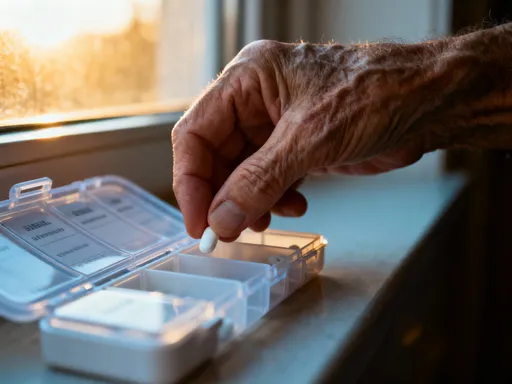
To make consistency easier, I adopted simple tools. I set daily phone alarms labeled with the medication name and dose. I also began using a seven-day pill organizer, filling it once a week during a quiet evening. This not only reduced the chance of missed doses but also gave me a sense of control. Seeing the pills laid out for the week ahead made the routine feel manageable. I placed the organizer in a visible spot—on the kitchen counter near my coffee maker—so it became part of my morning ritual. These small changes didn’t require effort, but they made a lasting difference. Over time, taking medication at the same time every day became automatic, like brushing my teeth or locking the door at night.
Tracking Side Effects Without Panic
Side effects were one of the most unsettling parts of my recovery. At first, every headache, dizziness, or moment of fatigue felt like a warning sign. I worried that the medication was harming me, that I was reacting badly, or that something was wrong. This fear led to anxiety, which only made symptoms feel worse. I once considered stopping my medication altogether after experiencing mild nausea for two days. But when I spoke with my doctor, she reminded me that side effects are common, especially in the first few weeks, and that not every discomfort means danger. What mattered was how I responded to them.
I decided to start tracking my symptoms in a notebook. Every evening, I wrote down how I felt, what I ate, when I took my medication, and any side effects. At first, the entries were emotional—“felt terrible,” “headache again,” “can’t focus.” But over time, patterns emerged. I noticed that fatigue often peaked on Tuesdays, which coincided with my therapy appointments. Headaches were more frequent on days when I didn’t drink enough water. Dizziness usually happened when I stood up too quickly, not after the medication itself. This shift—from reacting emotionally to observing objectively—changed everything. I began to see side effects not as random attacks, but as signals from my body that I could learn to understand.
Tracking also improved my conversations with my doctor. Instead of saying, “I feel bad sometimes,” I could say, “I’ve had mild dizziness after standing up, mostly in the afternoon, and it’s worse on days when I skip lunch.” This kind of specific, data-driven communication allowed my doctor to make informed decisions. She adjusted my dosage slightly and suggested I eat a small snack before taking the medication, which reduced the dizziness significantly. I learned that side effects don’t have to be ignored or feared—they can be managed, minimized, and sometimes prevented. The key is not to panic, but to observe, record, and share.
The Team Approach: How Doctors and I Worked Together
One of my biggest mistakes early in recovery was trying to manage medication on my own. I once reduced my dosage because I thought I was feeling better, without discussing it with my doctor. Within days, my symptoms returned with greater intensity. I had disrupted a carefully balanced treatment plan, and it took weeks to regain stability. That experience taught me a crucial lesson: medication management is not a solo journey. It requires partnership, communication, and trust between patient and healthcare provider.
I began to approach appointments differently. Instead of waiting until I was in crisis, I prepared in advance. I brought my symptom log, a list of questions, and a record of any changes in my routine. I learned to ask specific questions: “What is the goal of this medication?” “How long should it take to see effects?” “What side effects should I watch for, and when should I call you?” These questions helped me understand my treatment plan more fully. I also learned to be honest about my struggles—forgetting doses, worrying about side effects, feeling impatient with progress. My doctor responded with empathy and clarity, adjusting my plan when needed and reassuring me that adjustments are a normal part of recovery.
This collaborative approach transformed my experience. I stopped seeing my doctor as an authority figure giving orders and started seeing her as a partner in my healing. We made decisions together, based on data, observation, and my personal goals. I realized that asking questions is not a sign of doubt, but of engagement. It shows that I care about my health and want to get it right. Over time, this relationship became one of the most supportive parts of my recovery. I no longer felt alone in the process. I had someone to turn to, someone who understood the science and also cared about how I was feeling.
Combining Pills with Daily Habits
Medication works best when it’s supported by healthy daily habits. I learned this the hard way. At first, I focused only on taking the pills, believing that was enough. But I continued to skip meals, stay up late, and avoid movement. My progress was slow, and side effects were more pronounced. Then, I began to experiment with small lifestyle changes. I started drinking a glass of water before each dose, knowing that hydration helps the body absorb medication more effectively. I made sure to eat something light before taking pills that irritated my stomach. I added a short walk after my morning dose, which helped with circulation and energy.
These small habits created a synergy that boosted my results. Hydration reduced headaches. Eating regularly stabilized my energy and reduced nausea. Gentle movement improved my mood and sleep. I realized that medication doesn’t work in isolation—it works within the context of my whole body. If my body is dehydrated, exhausted, or stressed, even the best medication will struggle to be effective. But when I gave my body the basic support it needed—water, food, rest, movement—the medication had a better chance to work.
I also paid attention to sleep. I discovered that taking certain medications too late in the day disrupted my ability to fall asleep. By shifting the timing to earlier in the afternoon, I improved my sleep quality significantly. I created a bedtime routine: turning off screens, dimming lights, and doing gentle stretches. This not only helped with sleep but also gave me a sense of calm that carried into the next day. I stopped expecting medication to fix everything and started seeing it as one piece of a larger puzzle. When combined with daily habits, it became far more effective.
When Motivation Fades: Staying Consistent
There were weeks when I didn’t feel any different. No sudden energy, no dramatic improvement. Just the same routine, day after day. During those times, motivation faded. I questioned whether the medication was even helping. I almost stopped several times, convinced it wasn’t worth the effort. This is one of the hardest parts of long-term recovery: staying consistent when progress is invisible.
To keep going, I used a few practical strategies. I created a simple visual tracker—a calendar where I marked each day I took my medication on time. Seeing a chain of green checkmarks gave me a sense of accomplishment. I reminded myself of small wins: I had more good days than bad, I was sleeping better, I could walk farther without fatigue. I also linked my medication routine to an existing habit—like making coffee—so it became part of my morning flow. This technique, known as habit stacking, made it easier to remember and reduced the mental effort required.
I also changed the way I thought about consistency. Instead of viewing it as a rigid rule I had to follow, I reframed it as a choice I was making for myself. Each time I took my medication, I was choosing to support my healing. This shift in mindset—from obligation to self-care—made a big difference. I stopped feeling trapped by the routine and started feeling empowered by it. I also allowed myself grace. If I missed a dose, I didn’t label it as failure. I simply got back on track the next day. Recovery isn’t about perfection—it’s about persistence.
What I Wish I’d Known Sooner
Looking back, I wish I had understood earlier that medication is just one part of a much larger journey. It is not a cure, nor is it a sign of weakness. It is a tool—like physical therapy, nutrition, or rest—that supports the body’s natural ability to heal. I used to think that if I just took the right pills, I would get better. But healing is not linear. It comes in waves, with progress and setbacks, good days and hard days. Medication helps stabilize the process, but it doesn’t replace the daily work of self-care, patience, and listening to your body.
I also wish I had known that it’s okay to ask for help. I spent too much time trying to manage everything alone, afraid of being a burden or appearing incapable. But reaching out—to doctors, family, or support groups—was not a sign of weakness. It was an act of strength. Healing is not meant to be done in isolation. We are not meant to carry everything ourselves. When I finally allowed others to walk beside me, the journey became lighter.
Finally, I wish I had trusted the process sooner. There were moments I wanted to rush ahead, to skip steps, to force results. But recovery moves at its own pace. It requires trust—in the science, in the professionals, in the body’s wisdom. Medication is not a magic solution, but when used wisely, with consistency and care, it can make a meaningful difference. My journey taught me patience, resilience, and the power of small, steady choices. It taught me that healing is personal, and that every step forward—no matter how small—matters.