You Gotta Hike Uluru – This Natural Wonder Blew My Mind
Standing at the base of Uluru, I felt tiny—like nature was whispering, *“This is real power.”* The red rock glows at sunrise, shifts color at dusk, and hums with ancient energy. Hiking around its base isn’t just a walk—it’s a journey through time, culture, and raw beauty. If you love natural wonders that stir your soul, this Australian icon should be on your list. Let me show you why.
Arriving at Uluru – First Impressions That Hit Hard
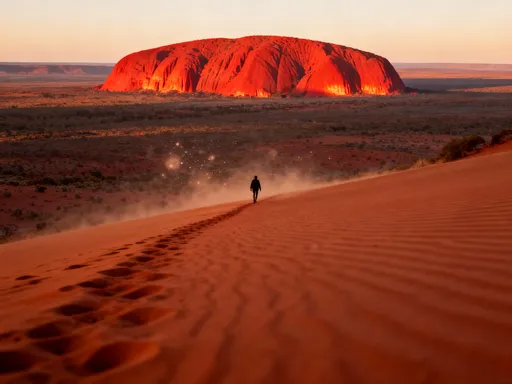
Reaching Uluru is part of the magic. Most travelers fly into Alice Springs, a remote desert town nearly 450 kilometers away, then drive across a landscape that feels like another planet. As the highway stretches forward, the terrain flattens into endless red earth dotted with low shrubs and the occasional ghost gum standing tall against the sky. There are no warning signs—just the sudden, breathtaking rise of a massive sandstone monolith emerging from the horizon like a mirage made real. The first sight of Uluru stops conversations, silences radios, and draws every eye to the window. It’s not just large—it’s profoundly present, as if the land itself has gathered to form something sacred.
The heat hits before the awe. Even in the cooler months, the Central Australian desert breathes warmth, and the sun reflects off the iron-rich rock with a glow that shifts from burnt orange to deep rust depending on the hour. What strikes visitors most is the silence—not emptiness, but a kind of listening stillness. Birds call distantly, wind brushes through spinifex grass, and yet there’s a hush, as if the land demands respect. Standing at the base, looking up at a formation that rises 348 meters above the plain and extends deep below the surface, one cannot help but feel small in the best possible way. This is not a postcard moment. It’s a visceral reminder of Earth’s ancient, slow-moving power.
Families, solo travelers, and elders alike walk the viewing platforms with quiet expressions. Some sit on shaded benches, simply staring. Others circle the base slowly, as if pacing around a sleeping giant. The journey to Uluru is long, but it serves a purpose: it strips away the noise of daily life and prepares the spirit for what lies ahead. By the time you lace up your boots for the base walk, you’re no longer just a tourist. You’re a witness.
Why Hiking Uluru Is More Than Just a Trail Walk
Walking around Uluru is not like hiking in a national park back home. It’s not about conquering elevation or chasing a summit view. This 10.6-kilometer loop trail is a pilgrimage of awareness—one that connects geology, ecology, and culture in a way few places on Earth can match. For decades, some visitors climbed the rock, drawn by the challenge. But in 2019, that practice ended permanently out of deep respect for the Anangu, the Traditional Owners of the land. Their message was clear: Uluru is not a playground. It is a living cultural landscape, embedded with spiritual meaning and ancestral law.
The base walk honors that truth. As you follow the marked path, you’re not just seeing rock and sand—you’re walking through Tjukurpa, the Anangu system of knowledge, law, and belief that governs life, land, and relationships. Every cave, waterhole, and ridge tells a story from the creation time, when ancestral beings shaped the world. These are not myths in the Western sense—they are living truths, passed down for over 30,000 years. To walk here is to be invited into a narrative far older than nations, cities, or modern borders.
And yet, the experience remains accessible. Signage along the trail explains key sites with clarity and reverence. Rangers offer free talks that deepen understanding without overwhelming. You don’t need to be a scholar to feel the weight of this place. You only need to be present. The trail doesn’t ask for athleticism; it asks for attention. It rewards curiosity with quiet revelations—how a shadow reveals ancient carvings, how a breeze carries the scent of desert herbs, how the rock seems to breathe as light moves across its surface. This is tourism transformed into something deeper: a moment of connection with land, history, and self.
The Base Walk Trail – What to Expect Step by Step
The official Uluru base walk begins near the Cultural Centre, where visitors are encouraged to start with a brief orientation. From there, the well-marked trail follows a counter-clockwise route, designed to guide hikers through the most significant natural and cultural sites. The path is mostly flat but varies in texture—sometimes hard-packed earth, sometimes loose gravel or uneven rock. Sturdy walking shoes are essential, especially in warmer months when the ground radiates heat. There are shaded rest areas and water refill stations at key points, but hikers must carry at least two liters of water per person, regardless of fitness level.
The first major stop is the Mutitjulu Waterhole, a permanent spring nestled in a shaded rock alcove. Here, the sound of flowing water is a miracle in the desert. The pool is surrounded by rock art that dates back thousands of years, including depictions of the ancestral Mala (hare-wallaby) people. Rangers often gather here to share stories, explaining how water, survival, and ceremony are intertwined. The art is not merely decorative; it marks sacred sites and teaches lessons about responsibility and balance.
Continuing along the trail, hikers pass through areas of dramatic rock formations—crevices worn smooth by wind and water, overhangs that offer shelter, and panoramic views of the surrounding plains. One of the most striking moments comes when the full circumference of Uluru comes into view. From certain angles, the rock appears to lean forward, as if watching you in return. The walk typically takes between three and four hours at a relaxed pace, allowing time for photos, rest, and reflection. There are no shortcuts or hidden paths—the trail is designed to be followed as intended, ensuring safety and cultural integrity.
Throughout the journey, the changing light transforms the experience. At dawn, the rock glows soft pink, then deepens to fiery red as the sun climbs. By late afternoon, it turns a rich violet before fading into shadow. Many visitors time their walk to finish at sunset, when the viewing area fills with quiet onlookers. It’s not a performance. It’s a shared moment of awe—one that requires no words, only presence.
Nature’s Secrets Along the Path – Flora, Fauna & Geology
Beneath the grandeur of Uluru lies a thriving desert ecosystem, finely tuned to survive extreme conditions. The red soil isn’t barren—it’s alive with specialized plants that have adapted over millennia. Spinifex grass, with its spiky hummocks, dominates the landscape. Its resin was traditionally used by Anangu for tool-making and healing. Nearby, the quandong tree bears bright red fruit, a native superfood rich in vitamin C. Desert oaks, with their upright branches, stand like sentinels, their roots reaching deep for moisture.
Wildlife is subtle but present. If you walk quietly, especially at dawn or dusk, you might spot a black-flanked rock wallaby darting between boulders. These small, agile marsupials are endangered, and Uluru is one of their last strongholds. Skinks, geckos, and desert birds like the zebra finch and the Australian raven also call this place home. Even insects play a role—termites build towering mounds that regulate temperature, and ants help recycle nutrients in an environment where nothing goes to waste.
Geologically, Uluru is a survivor. Formed over 500 million years ago, it began as sediment deposited in an ancient sea. Tectonic forces lifted it vertically, exposing layers that now reveal Earth’s deep history. The rock’s red color comes from iron oxide—a natural rust that coats the surface. Unlike mountains shaped by volcanoes or erosion, Uluru is a *freestanding inselberg*, rising abruptly because the softer surrounding rock wore away over time. It’s not just old. It’s a geological anomaly, a remnant of a vanished world.
The Anangu have long understood these natural rhythms. Their knowledge of plant uses, animal behavior, and water sources is not folklore—it’s science refined through generations of observation. When they speak of Tjukurpa guiding land care, they’re describing a sustainable relationship with nature that modern conservation is only beginning to appreciate. Walking the trail, you begin to see the desert not as harsh or empty, but as balanced, intelligent, and deeply interconnected.
Respecting Culture – Understanding the Anangu Perspective
One of the most important lessons Uluru offers is this: some places are not meant for everyone to touch. The decision to close the climb was not made lightly. For years, the Anangu asked visitors not to ascend, explaining that the route follows the path of ancestral beings and is sacred. Despite signs and requests, many climbed anyway, often unaware of the cultural weight they were disregarding. In 2019, after decades of advocacy, the climb was permanently closed—a landmark moment in Indigenous land rights and cultural respect.
Today, the message is clear: visit with humility. The Anangu do not see themselves as owners of Uluru, but as its caretakers. They speak of *Tjukurpa* not as religion, but as the foundation of life—guiding how to live, how to share, how to heal. Their connection to the land is not symbolic. It is practical, daily, and deeply felt. When they say Uluru is alive, they mean it in every sense.
Visitors can learn directly from this wisdom. The Cultural Centre offers films, exhibits, and guided walks led by Anangu rangers. These experiences are not performances for tourists—they are invitations to understand. You’ll hear stories of creation, survival, and responsibility. You’ll learn why certain areas are restricted, why photography is sometimes discouraged, and why silence can be more powerful than speech. This is not about rules. It’s about respect.
For many visitors, especially women over 30 who value meaning and connection, this shift—from taking photos to seeking understanding—becomes the heart of the journey. It’s a reminder that travel isn’t just about where you go, but how you show up. Coming to Uluru isn’t about checking a box. It’s about opening your mind to a different way of being in the world.
Best Times & Tips for a Meaningful Hike
To truly experience Uluru, timing is everything. The best months to visit are between May and September, when daytime temperatures are mild, ranging from 20°C to 30°C (68°F to 86°F). Even then, the ideal time to hike is at dawn or late afternoon. Starting early allows you to complete the walk as the sun rises, casting golden light across the rock. The morning air is cool, the shadows long, and the wildlife most active. Sunset hikes offer a different magic—the rock transforms through a spectrum of reds and purples, and the desert cools rapidly as night falls.
Preparation is key. Wear a wide-brimmed hat, sunscreen, and lightweight, long-sleeved clothing to protect against UV exposure. Closed, sturdy shoes with good grip are essential—the path can be slippery near rocky sections. Carry more water than you think you’ll need; dehydration happens quickly in dry heat. Snacks like nuts, fruit, or energy bars help maintain energy, especially on longer walks. There are no food vendors on the trail, so pack everything in and take all trash out.
Check the Parks Australia website before your visit for alerts about track closures, extreme heat, or cultural ceremonies that may limit access. Respect all signage—some areas are closed for conservation or cultural reasons. Consider joining a free ranger-guided walk; these are offered daily and provide insights you won’t find in guidebooks. If possible, combine your Uluru visit with a trip to Kata Tjuta (the Olgas), another sacred site just 40 kilometers away. The 7.4-kilometer Valley of the Winds walk there is equally powerful and less crowded.
For photographers, patience is rewarded. Wait for the soft light of dawn or dusk. Use a tripod if possible. But don’t let the camera dominate the moment. Put it down often. Sit quietly. Listen. Let the stillness sink in. Some of the most powerful memories aren’t captured in pixels, but in feeling—the warmth of the rock on your palm, the scent of rain on dry earth, the sound of your breath syncing with the wind.
Why Uluru Stays With You – A Natural Legacy Beyond the Hike
Few places leave a mark like Uluru. Long after the flight home, the images remain: the first glimpse on the horizon, the silence at the waterhole, the final look at sunset. But it’s not just the visuals that linger. It’s the feeling—that sense of being part of something vast and ancient. In a world of constant noise and speed, Uluru offers a rare gift: stillness with purpose.
For women who have raised families, built careers, or navigated life’s transitions, this kind of experience can be deeply grounding. It’s not about escape. It’s about reconnection—remembering what matters, what endures. Uluru doesn’t shout. It whispers. And in that whisper is a lesson about patience, resilience, and respect. It reminds us that some things cannot be rushed, bought, or controlled. They can only be witnessed.
This site also stands as a global model for responsible tourism. By listening to the Anangu, the world has seen how cultural respect and conservation can go hand in hand. Uluru is not frozen in time. It is evolving—with visitors learning, policies changing, and traditions preserved. It proves that travel can be a force for good when done with care.
So yes, you should hike Uluru. Not to climb it, but to walk beside it. To learn from it. To let it change you. And when you return home, carry that red earth in your memory. Let it remind you of the power of quiet, the beauty of balance, and the importance of showing up with respect—for places, for people, and for the planet we all share.